
Built by disabled people, for disabled people
We're a small team of disabled and chronically ill creators who got tired of explaining ourselves on apps that weren't made with us in mind. So we built the disabled dating site we wished existed - warm, accessible, and free where it matters most.
Free messaging on the core tier. No devotees. No data sold.
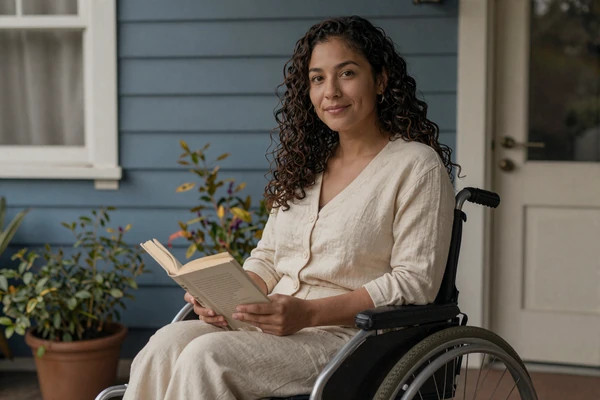
Why we started Personal Singles Dating
This site started in a group chat. Six of us - a wheelchair user, two autistic adults, a Deaf graphic designer, a spoonie with chronic fatigue, and an amputee who served - had spent years comparing dating-app horror stories. Ghosting after disclosure. Devotee messages. Buttons our screen readers couldn't see. The exhausting cycle of editing ourselves down to the most "palatable" version, just to get a reply.
We kept saying the same thing: everyone deserves a chance at love. Not a watered-down version. Not love framed as inspiration. Just the same kind of slow, mutual, ordinary love anyone else gets to have. So in 2024 we stopped venting and started building. Personal Singles Dating is what came out of those late-night calls - a place where you can be openly disabled and dating without performing wellness, masking traits, or apologizing for the body and brain you live in.
We chose the name carefully. Personal because dating should feel human, not algorithmic. Singles because we welcome every relationship goal - from a first coffee to a long marriage. Dating because connection, intimacy, and partnership belong to us, full stop.
Our mission, in one sentence
"To build the most welcoming, accessible, and honest disabled dating site on the internet - where you connect with people who understand just what it's like to be you, and live love to the full."
- The Personal Singles Dating teamEverything below - every feature, every moderation rule, every bit of plain language - comes from this one sentence.
Why a disabled dating site has to exist
Mainstream dating apps treat accessibility as an add-on, not a foundation. The result is a landscape that places most of the disclosure burden, accessibility planning, and emotional labor on disabled users. Dating sites for people with disabilities exist to flip that.
A 2025 review from Includate concluded that Tinder, Bumble, and Hinge "continue to treat accessibility as an add-on rather than a foundation, placing much of the burden on disabled users." Buttons without screen-reader labels. Swipe gestures impossible for limited-dexterity users. Profile flows that simply don't work with VoiceOver, NVDA, or TalkBack. Disclosure becomes a tense mid-chat moment instead of a settled fact.
We're not trying to be the next mainstream app. We're trying to be the opposite of one - a quieter, slower place where the work of access is shared, not dumped on the disabled person. If you want a deeper look at how that translates into product choices, see how the platform actually works or read about our safety and privacy approach.
The principles that shape every decision
When we argue about a feature, a policy, or a moderation call, we come back to these six. They're not slogans - they're the filter we run every product choice through.
-
Whole people, never diagnoses
Disability is part of you, not a label that overrides your humor, taste, or values. Profiles lead with personality.
-
Autonomy over advice
You decide your pace, your disclosure, and your limits. We give you tools and gentle hints, never scripts.
-
Accessibility as the floor
Screen readers, keyboard navigation, captions, voice-friendly profiles, reduced motion - built in, not bolted on.
-
Free where it matters
Messaging is free on the core tier. We never gate the conversation behind a paywall - relationships start with a hello.
-
Anti-fetishization, always
Devotees, fetishizers, and inspiration-porn seekers are removed. We pre-screen, moderate, and listen to reports.
-
Friendship counts too
Loneliness hurts whether or not romance is the goal. Mood tags and the Browse Community path welcome real friendships.
About the team behind the site
We're six co-founders and a small group of part-time moderators, accessibility testers, and community guides - almost all of us disabled, neurodivergent, Deaf, or chronically ill. We hire people with lived experience for moderation because catching ableism, fetishization, and scam patterns takes someone who has been on the receiving end. We pay our accessibility testers properly. We post our team's pronouns and access notes, not because it's trendy, but because we'd want a date to know that about us too.
We're also realistic. We don't promise love in 30 days. We don't run before-and-after photo campaigns. We don't sell your data to advertisers - we never have, and our terms and privacy policy say so in plain language. What we promise is a calmer place to be disabled and dating, with people who already get the basics.
Our stance against fetishization
Devotees are not welcome here
A "devotee" is someone who pursues disabled people specifically to fetishize their disability. It's not a compliment, it's not flattering attention, and it's not a gray area. Our terms of service prohibit fetishizing disability, sending sexualized messages about mobility aids or prosthetics, or seeking partners purely on the basis of a diagnosis. Profiles that signal it - through language, photo focus, or message patterns - are removed. Members can block and report in one tap, and our moderators follow up within two business days.
We pair this stance with disclosure choice. Research by Mimoun et al. (2025) found that earlier, casual disclosure - woven naturally into conversation - generates trust rather than interrogation. So we built profiles that let you share at your pace: structured disability fields if you want them, free-text "about me" blocks if you don't, and never a forced reveal. Disclosure is, in the words of one researcher, "a vital act of agency." We protect that.
If you ever feel something is off - a comment, a photo, a message - tell us. Read more about our safety and privacy approach or browse common questions on our FAQ page.