

Epilepsy dating relationships • Free messaging

Dating with epilepsy, prepared and unashamed

A chronic illness dating app where epilepsy does not need a defensive opening line. Match with partners who already understand episodic conditions, share trigger-aware date ideas, and learn seizure first aid because they want to - not because you had to teach them. Free messaging, story-led profiles, and no pressure to perform wellness.

Free signup. Free messaging. No card required. No fetishizers, no devotees. Privacy by default.

Hannah, a woman with epilepsy, sharing coffee and a calm laugh with her partner - dating with epilepsy in everyday life
The disclosure question

Why epilepsy lives in the medium-stigma zone

Epilepsy occupies what researchers call a "medium stigma" position in the disability disclosure hierarchy. A 2025 study by Mimoun and colleagues placed it above conditions like asthma, where most partners barely react, and below psychiatric diagnoses, where reactions are often sharper. Translation for dating: most matches will be fine. Some will need a beat to adjust. A few will react badly, and those few are doing you the favor of revealing themselves early.

Epilepsy does not affect intellect, personality, or the capacity for love. It is a neurological condition with episodes - brief, manageable for most, and well-controlled in a majority of adults on modern medication. Inclusive dating advice applies here in full: you are a person who has epilepsy, not a diagnosis with a person attached.

What disclosure timing actually changes is who shows up to the second date. Telling someone on profile filters for partners who are already at peace with the idea. Telling someone in person, after they have met you, gives them a face to attach to the word. Both are valid. The wrong move is hiding it past the point where a seizure would be the disclosure - for safety reasons, that bar is non-negotiable before any in-person meeting where you will be alone with the person.

The non-negotiable line

However you handle disclosure socially, a partner needs to know about your epilepsy before you are alone together in a setting where a seizure would matter - driving, swimming, hiking somewhere remote. Not because you owe them your medical history, but because their being unprepared is a safety problem for you.

Disclosure timing

When to share, and how

There is no single right moment. There are two strong approaches and each one filters for a different kind of partner. Pick the one that matches your energy this season.

Lead on the profile

One line in your "about me" - calm, factual, not apologetic. Something like: "I have well-controlled epilepsy. Happy to answer questions; happy not to make it the topic." This pre-filters for partners who are already comfortable with the word.

Best for: people tired of the disclosure conversation entirely, members in a low-energy season, or anyone whose seizures occur often enough that early prep matters.

Trade-off: some matches who would have been fine after meeting you in person will pre-rule themselves out. That is the price of the filter.

Share in conversation

Profile stays focused on who you are - work, hobbies, weekend things. Epilepsy comes up naturally somewhere between message ten and date two, in a sentence: "I should mention I have epilepsy. Mostly well-managed. Want me to tell you what to do if you ever see a seizure?"

Best for: members whose seizures are infrequent, who want to be met as a full person first, or who simply prefer warmer disclosure rhythms.

Trade-off: some partners will feel surprised even when they have no real objection. A calm, pre-rehearsed sentence cushions that.

Either way, our communication in relationships guide has scripts for the actual sentence - practiced once out loud, the disclosure stops feeling like a confession.

Partner preparedness

Seizure first aid every partner should know

A short, clear protocol - the kind any partner can hold in their head. Walk through it together once during a calm afternoon. That single conversation is worth more than ten reassurances later.

  • Stay calm and stay close

    Most seizures end on their own within one to two minutes. Sit nearby, speak softly if at all, and time the seizure on your phone. Calm matters more than action in the first minute.

  • Move dangerous things, not the person

    Clear sharp objects, hot drinks, and hard furniture from the immediate area. Do not restrain the person and do not put anything in their mouth. Both are common myths and both cause harm.

  • Cushion the head, ease to the side

    Slide something soft under the head - a folded jacket works. If they are on the floor, gently roll them onto their side once movement has slowed, so any saliva drains away from the airway.

  • Time it - five minutes is the rule

    If the seizure lasts longer than five minutes, or if a second seizure begins before consciousness returns, call 911. Otherwise, emergency services are not automatic. Many people with epilepsy explicitly do not want them called.

  • Stay through the postictal phase

    After a seizure, your partner may be confused, exhausted, or briefly disoriented for ten to thirty minutes. Speak in short reassuring sentences. Do not quiz them. Offer water once they are fully alert.

  • Follow their pre-stated plan

    Every member with epilepsy has a personal "what to do if" plan - emergency contact, medication notes, hospital preferences. Read it together once. Keep it where you both can find it.

When to call 911 - clearly

Call emergency services if the seizure lasts longer than five minutes, if a second seizure starts before the person is fully conscious, if the person is injured during the seizure, if it is their first known seizure, or if they have trouble breathing afterward. Outside of those, follow the person's stated plan.

Date planning

Trigger-aware date planning

Common triggers include sleep loss, alcohol, dehydration, missed medication, and flashing lights. None of these mean small lives. They mean slightly thoughtful date design, the same way any couple designs around any health detail.

  • Skip strobing nightclubs

    For photosensitive epilepsy specifically, fast-flashing visual environments - strobe-heavy clubs, certain concerts, IMAX previews - are off the menu. Plenty of music venues use steady lighting; ask before buying tickets.

  • Eat early, sleep enough

    Skipping meals and pulling late nights are two of the most common reported triggers. A weeknight date that ends by 10:30 - and a real dinner inside it - is gentler than a midnight rooftop you will both regret tomorrow.

  • Mind the medication clock

    Most antiepileptic medications work best on a steady schedule. If your date overlaps with a dose time, take it. A partner worth keeping will not blink. They will likely set the same reminder on their own phone.

  • Choose lower-stakes settings early

    For first dates, pick venues where a seizure would be inconvenient rather than dangerous - coffee shops, parks, museums, low-key restaurants. Save kayaking, swimming, and remote hiking for partners who already know the protocol.

  • Watch alcohol, drink water

    Alcohol - especially in larger amounts - and dehydration both lower seizure threshold for many people with epilepsy. One drink with a full glass of water beside it is usually fine. Three drinks at a wedding without water is a known risk.

  • Track stress as a real variable

    Stress is one of the most cited triggers. A first-date setting you can leave easily, with no pressure to be witty for four hours, treats stress as the medical variable it actually is. You can plan a longer date once your nervous system has met the person.

For more on accessible date design across conditions, see our accessibility in dating guide.

The full picture

Well-controlled epilepsy, fully lived dating life

Around 70% of adults with epilepsy achieve seizure control on medication (CDC, 2023). That majority lives full romantic lives - partnered, married, parenting, adventuring - with epilepsy as one detail among many.

What "well-controlled" actually means in dating

For many members, seizures occur rarely - once a year, sometimes longer between episodes. Daily life looks the way anyone's daily life looks: work, friends, hobbies, the occasional terrible Sunday. Dating runs the same way. Disclosure happens once, the partner adjusts a few small habits, and life proceeds.

For members with more frequent seizures, dating still works - the planning layer is just thicker. A partner who treats safety prep as ordinary care, the way couples manage food allergies or migraines, is the partner you are looking for. The difference between a workable relationship and a stressful one is rarely the seizure frequency. It is the partner's calm.

Members navigating epilepsy alongside another condition often find their way to communities like ours, where multiple invisible conditions are familiar and don't need a footnote. That overlaps strongly with our bipolar dating community and our PTSD dating community.

"I dated for years apologizing in advance for a seizure that happened, on average, once every fourteen months. The day I stopped apologizing - and just told people, calmly, what to do if it ever did happen - I started getting second dates."

- Member reflection, epilepsy diagnosed at 19

Epilepsy-aware therapy is increasingly available too. Practices like Ancora Wellness in Hillsboro, Oregon offer counseling specifically for individuals and couples navigating epilepsy alongside chronic illness. Online disability dating communities, including Special Bridge and AbiliMatch, also host members where epilepsy doesn't need a defensive explanation. You are not pioneering this. You are joining a community already several years deep into the conversation.

Browse the community first

See how members with epilepsy and other chronic conditions write their stories. Look around without an account.

No card required to look. Free messaging when you join. No data sold.

Member stories

Epilepsy members sharing what works

Edited for length, shared with permission. Names and identifying details changed.

Calm · Grounded
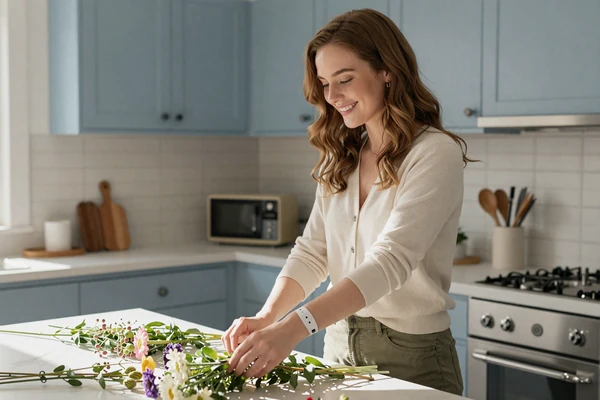
Hannah, a woman with epilepsy, arranging wildflowers in her sunlit kitchen - calm dating with epilepsy story

Hannah, 32

I put one line on my profile: "Well-controlled epilepsy. Ask me anything, or don't - both work." It cut my matches by a third and tripled the quality. Met Sam four months in. He learned the first aid in fifteen minutes. We have been together a year.

Steady · Honest
Marcus, a man with temporal lobe epilepsy, laughing on a Brooklyn stoop with coffee - late-diagnosed epilepsy dating story

Marcus, 38

I got diagnosed at 34 after years of confused doctors. Disclosure used to feel like coming out. Now I tell partners around date two, simply, and let them ask. Everyone who has stayed has been better than the version I was bracing for.

Common questions

Epilepsy dating questions

The questions our epilepsy members ask most. For more, see our full FAQ page.

When should I tell a date I have epilepsy?

There is no single right answer, but there is a non-negotiable line: a partner needs to know before you are alone together in a setting where a seizure would matter - driving, swimming, hiking remotely. Otherwise, two strong approaches work. Lead on your profile to filter for already-comfortable partners, or share calmly between message ten and date two. Both are valid. The only wrong move is hiding it past a safety threshold.

Is epilepsy considered high-stigma in dating?

No. A 2025 study by Mimoun and colleagues placed epilepsy in the "medium stigma" zone - above conditions like asthma, below psychiatric diagnoses. Most matches handle disclosure well. Some need a beat to adjust. A small minority react badly, and that minority is doing you the favor of revealing themselves before you invest further. On an epilepsy-aware platform, the disclosure tax of mainstream apps largely disappears.

What should my partner do if I have a seizure?

Stay calm and stay close. Time the seizure. Move sharp or dangerous objects out of the way, but do not restrain the person and never put anything in their mouth. Cushion the head, ease the body to one side once movement slows. Call 911 only if the seizure lasts longer than five minutes, a second seizure begins, the person is injured, or it is their first known seizure. Stay through the ten-to-thirty-minute postictal recovery and follow the person's pre-stated plan.

Can I have a full dating life with epilepsy?

Yes. Around 70% of adults with epilepsy achieve seizure control on medication (CDC, 2023), and that majority lives full romantic lives - partnered, married, parenting, traveling. For members with more frequent seizures, the planning layer is thicker but dating still works. The deciding factor is rarely seizure frequency. It is the partner's calm and willingness to learn a short, clear safety protocol.

What date ideas work best when one partner has epilepsy?

Lower-stakes settings early on - coffee shops, parks, museums, low-key restaurants - where a seizure would be inconvenient rather than dangerous. Skip strobing nightclubs and IMAX previews if photosensitivity applies. Eat real meals, take medication on schedule, drink water alongside any alcohol, and aim to end weeknight dates by 10:30 because sleep loss is a common trigger. Save swimming and remote hiking for partners who already know the protocol.

Are there dating apps for people with epilepsy or chronic illness?

Yes. Personal Singles Dating welcomes members with epilepsy inside a wider chronic illness dating app community. Other inclusive options include Special Bridge and AbiliMatch, both spaces where invisible and episodic conditions don't need defensive explanation. The shared design choice across these platforms is community first - members who already understand episodic conditions before the conversation begins.

Will my dating life be limited by my medication?

Most antiepileptic medications work fine alongside ordinary dating life. The main consideration is taking doses on a steady schedule - including during late evenings or sleepovers - and being aware that alcohol can interact with some medications and lower seizure threshold. A simple phone reminder and one drink instead of three is usually all the adjustment that's needed. Your neurologist remains the right source for specifics.

Is the chronic illness dating app free?

Yes. Free signup, free messaging, free profile, free browsing on the core tier. We have an optional premium layer for advanced filters and verification badges, but the messaging that actually builds relationships is free for everyone. We do not sell data, and we do not pressure members to upgrade.

Join free today

Disclose calmly. Date fully. Find partners who treat seizure first aid as ordinary care, not heroism.

Free on the core tier. No card required. No fetishizers, no devotees. Privacy by default.