
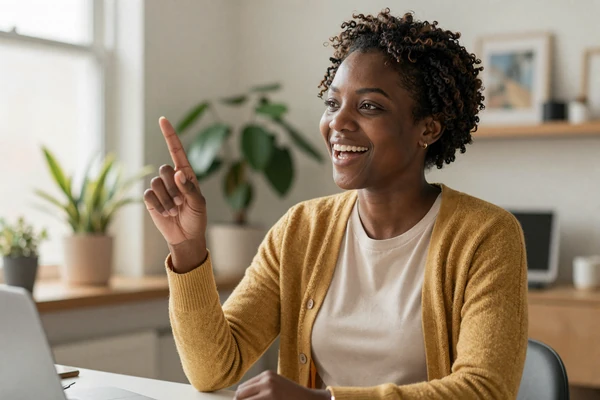
Maya, 30
I made my profile video in ASL with English captions. The matches I got opened in ASL too - no "hi how are you typed slowly because I am scared." It felt like the lights came on.
A signing-first community for Deaf, deaf, hard-of-hearing, and late-deafened singles - and hearing partners ready to learn. Video profiles, captioned messaging, ASL-aware matching. No "what?" loops. No having to explain why sign language is a language.
Free to join. Free to message. Captions on every video tool. No card required.
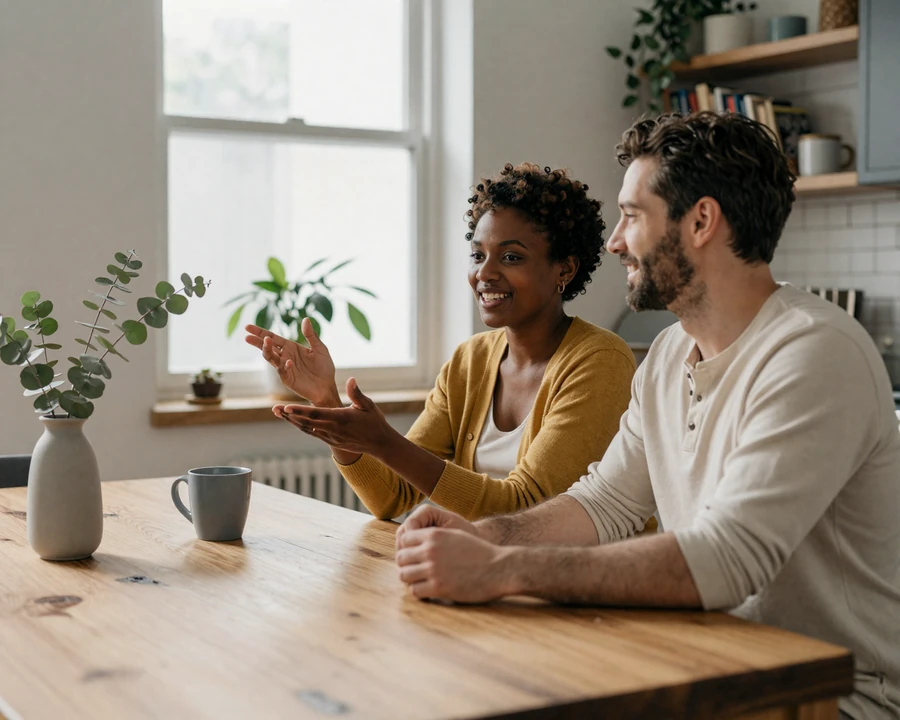
Deaf with a capital D is a cultural identity. It refers to a community with its own language (ASL in the U.S., BSL in the U.K., and more than 200 sign languages worldwide), its own humor, its own performing arts, its own schools, and its own deeply held values about visual communication and shared history. Lowercase deaf describes the audiological condition - not hearing well, or not at all. Many people are both. Some identify only with one. On a deaf dating site, that distinction is not pedantic; it is the first signal that the platform actually understands who it is built for.
The ground truth is uncomfortable but worth naming. RNID's 2024 polling found that half of hearing people do not know any sign language, a third are unsure how to communicate with sign language users, and 6% admitted they would be embarrassed to date someone using sign language or hearing aids. Two-thirds of the Deaf community (67%) have faced negative attitudes - and almost half of those experiences came from family. That is the climate Deaf singles bring to mainstream dating apps. It is the climate this category exists to push back against.
"On hearing apps I was always teaching. Here, my first match opened with 'PAH! finally' - pure Deaf-culture joy. I knew I was home."
- Maya, member, AtlantaDeaf culture also is not monolithic. Members include culturally Deaf signers, oral deaf people who lip-read, late-deafened adults adjusting after hearing loss, hard-of-hearing people who use hearing aids or cochlear implants, CODAs (Children of Deaf Adults) who are hearing and signing, and DeafBlind members. The platform supports them all without forcing a single mode. You set your communication preferences. Matches see them. Conversation starts on common ground, not in translation purgatory.
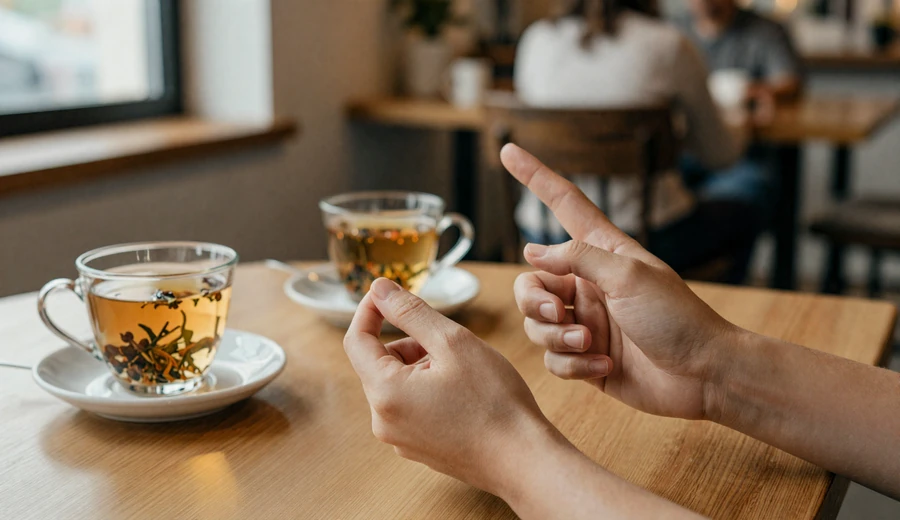
Establish preferred communication methods early - sign language, lip-reading, written, or a mix. Mutual patience does the rest. Each member sets a primary mode on their profile and a secondary one for hearing partners or new matches still learning.
Primary mode for many culturally Deaf members. Profile video clips and in-app video calls let signing be the conversation, not a translation layer on top of it.
Many oral deaf and hard-of-hearing members prefer well-lit video where the speaker faces the camera. Enunciate clearly without exaggerating or shouting - exaggeration distorts the lip shapes lip-readers rely on.
Some members prefer to keep early conversations in text, where pace, tone, and re-reading are all on their terms. The platform is fully text-navigable and works seamlessly with screen readers and refreshable braille displays for DeafBlind users.
When a Deaf member and a hearing match want a phone-style call, VRS connects through a certified ASL interpreter at no cost in the U.S. We support sharing VRS-friendly contact details inside the app once trust is established.
Live auto-captions on every in-platform video call - visible by default, never an opt-in afterthought. Helpful for late-deafened members, hard-of-hearing members, and any signing pair who wants a transcript of the conversation.
On in-person dates, a shared phone notepad or a small notebook is still one of the calmest, most reliable backups when the room gets loud or the lighting drops. Low-tech, zero pressure, fully accessible.
Going deeper on this in our communication in relationships guide.
Captioning and speech-to-text apps have changed what is possible on a date. Live transcription on a phone, propped between two coffees, can carry an entire first conversation if both people want it to. The category has matured fast: products like the YUEHISY AI Voice Hub now offer real-time voice-to-text transcription, multilingual translation, and conversational AI integration on phones, Chromebooks, and tablets - purpose-built for Deaf and hard-of-hearing daily life. Apple's Live Captions, Google's Live Transcribe, Otter.ai, and Ava all do similar work in slightly different shapes.
For phone-style calls between Deaf and hearing matches, Video Relay Service (VRS) remains the gold standard in the U.S. - a free service that routes a video call through a certified ASL interpreter. Captioned phone services (CaptionCall, InnoCaption) work similarly for late-deafened members who use voice but rely on captions to follow the response. Inside the platform, every video call carries automatic captions and a downloadable transcript, so a recap is one tap away when something important got said.
One quiet but important note: tech does not replace learning even a few signs. Hearing partners who pick up HELLO, NICE-TO-MEET-YOU, HOW-ARE-YOU, MORE-COFFEE?, I-LOVE-YOU consistently report that the relationship shifts. RNID found that learning a small ASL or BSL vocabulary registers, on the Deaf side, as a real act of care - far beyond what the literal words convey. The apps help. Effort is what builds the bridge.
Lighting, sightlines, and ambient noise matter more than ambience. The right venue can carry a first date the way a great soundtrack carries a film - except here the soundtrack is silence, well-managed.
| Venue type | Lighting | Noise level | Why it works |
|---|---|---|---|
| Quiet daytime cafe | Bright natural daylight | Low to moderate | Excellent sightlines for ASL and lip-reading, calm enough for hearing-aid users, and easy to leave if the chemistry is off. |
| Park bench or botanical garden | Outdoor daylight | Low | The classic Deaf-culture-friendly first date. Open sightlines, no music, plenty of space for animated signing. Bring sunscreen, not headphones. |
| Museum or art gallery | Generally good, varies by exhibit | Low | Built-in conversation prompts, slow pace, written labels. Many U.S. museums offer ASL tours - worth checking ahead. |
| Restaurant - booth in a quiet corner | Ask for the brightest table | Moderate (avoid open kitchens) | Booth seating means you face each other directly. Call ahead and request a quiet table with good light - most hosts accommodate when asked. |
| Captioned movie or live theater with ASL | Dim during, well-lit lobby | Loud (with captions) | Open-caption screenings and ASL-interpreted theater have grown fast since 2023. Conversation happens before, after, and over dinner - not during. |
| Cooking together at home | Full kitchen lighting | Controllable | Skip music, keep the kitchen well-lit, leave the prep counter clear for signing. One of the most underrated low-stakes Deaf dates. |
| Loud bar or club | Dim to dark | Very high | Generally avoid for first or second dates. If a partner suggests one, that is information about how much they have thought about your day. |
Two practical tips most members swear by. Sit facing each other so lip movement and facial grammar (a huge component of ASL) are fully visible. And do not be shy about quietly steering the venue - texting a host the morning of the date to request a quiet, well-lit table is normal, and most places say yes.
Edited for length, shared with permission. Names changed for privacy.
I made my profile video in ASL with English captions. The matches I got opened in ASL too - no "hi how are you typed slowly because I am scared." It felt like the lights came on.
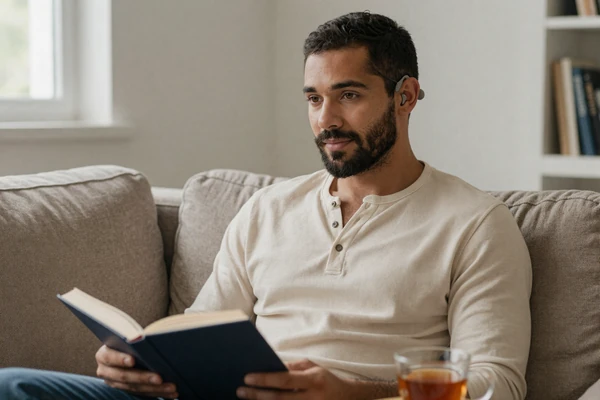
I lost most of my hearing in my late twenties and stopped dating for two years. Here I could mark "lip-reads, captions please" and that was it - no explaining, no apologizing. We met for coffee in a bright window seat. We are still meeting.
The Deaf community sits alongside several overlapping spaces. Many members belong to more than one.
I-statements, active listening, scheduling check-ins, and communication patterns that travel across deaf, autistic, ADHD, and PTSD partners.
Voice-first communication, screen-reader-friendly profiles, in-person date orientation, and the depth of text and voice intimacy.
Pre-date venue research, accessible date ideas, and what accessibility actually means across disability types.
Eight characteristics of healthy relationships, autonomy, and anti-ableism in everyday dating practice.
The questions we hear most from Deaf members and the people dating them. For more, see our full FAQ page.
Yes. Personal Singles Dating runs a Deaf community within a wider disabled dating site, with ASL-friendly video profiles, captioned messaging, and member preference tags for ASL, lip-reading, text, or VRS. Other notable platforms include DeafSinglesMeet, Deaf Dating Network, and AbiliMatch. The defining test is whether the platform treats sign language as a language and Deaf identity as a culture - not as an accessibility feature bolted onto a hearing app.
The same way you flirt with anyone - in their preferred mode. For ASL signers, eye contact and facial expression carry enormous flirtation weight, because facial grammar is built into the language. For lip-readers, face them in good light and slow your pace slightly without exaggerating. In text, be specific and warm. Learning even a handful of signs (HELLO, NICE-TO-MEET-YOU, BEAUTIFUL, COFFEE?) lands as a real act of care, not a party trick.
Deaf community life happens at Deaf coffee chats (regular informal meetups in most U.S. cities), Deaf clubs, ASL conversation groups, Gallaudet alumni events, Deaf sports leagues, Deaf church congregations, and online communities. A Deaf dating app extends those circles beyond what local geography allows, which matters in smaller cities where the Deaf social scene may be only a few dozen people.
No. Hearing members are welcome if they are open and respectful. Many Deaf members are happy to date hearing partners who are willing to learn - and the platform supports that learning curve with text and captioned video as the default. What does not work: arriving expecting a Deaf partner to be your hearing-world translator, or treating ASL as charming "extra" rather than the language a relationship will partly live in.
No. Video profiles in ASL are popular and we make them easy to record and caption, but text-only profiles work just as well. Some members prefer text first, video later, or text only. You set the mode that matches you, and matches see your preference before they reach out.
Live auto-captions are on by default for every in-app video call. Recorded profile videos can be auto-captioned in seconds, with a quick edit pass to fix names and signs. Captions are visible in cream text on a dark band, sized to meet WCAG contrast standards, and never an opt-in afterthought.
Yes. Free signup, free messaging, free profile, free captioned video calls on the core tier. An optional premium layer adds advanced filters and priority verification, but the messaging and video tools that build relationships are free for everyone. No card required to join.
Block and report - three independent reports trigger immediate review. Watch for matches who lead with "ASL is so beautiful" without curiosity about you, who push for sign-language video early, or who treat your deafness as an aesthetic. The platform also blocks known fetish keywords at signup. Trust your instinct: if a match feels off, it usually is.